


What Actually Works: Top Immune Support Foods for Peak Health

Get personalised recommendations with our assessment.
Personalised Health Diagnosis (PHD)
Most wellness content will sell you a superfood and call it a strategy. We're not doing that. Immune support foods work because they supply what your body actually needs — consistently, not dramatically. The top immune support foods to eat are the ones you can repeat: citrus, peppers, greens, yogurt, nuts, fish, berries, and spices. No single ingredient is the answer. A varied plate built around real nutrients is. The wellness industry loves complexity because complexity sells. We'll take the boring truth over a flashy lie every time.
The best immune support foods to eat daily include vitamin C-rich produce like citrus and bell peppers, anti-inflammatory spices like turmeric and ginger, gut-supporting fermented foods like yogurt, and protein sources like fatty fish and almonds. Together, these foods cover the core nutrient bases — vitamins C, D, and E, zinc, beta-carotene, and probiotics — that your immune system draws on every day.
Your immune system needs a steady supply of nutrients to do its work. Food provides the raw materials that support immune cell production and response — not as a one-time fix, but as an ongoing input your body depends on daily.
That is why a broad eating pattern matters more than chasing one supposed cure. Healthy foods for immunity work as part of your usual routine, not as a dramatic intervention you pull out when you feel a cold coming on.
Key nutrient groups include vitamins C, E, and D, zinc, beta-carotene, and probiotics. Vitamin C-rich produce supports normal immune function. Beta-carotene comes from colourful plants, while yogurt and fermented foods can support the gut environment. Fatty fish also adds protein and vitamin D to an immune-focused eating pattern.
Immune boosting foods do not switch your defenses on overnight. In practical terms, they help you meet nutrient needs that support normal immune function. Claims that one food prevents or treats infection go beyond what a food list can promise — and any brand telling you otherwise is selling you something, not helping you.
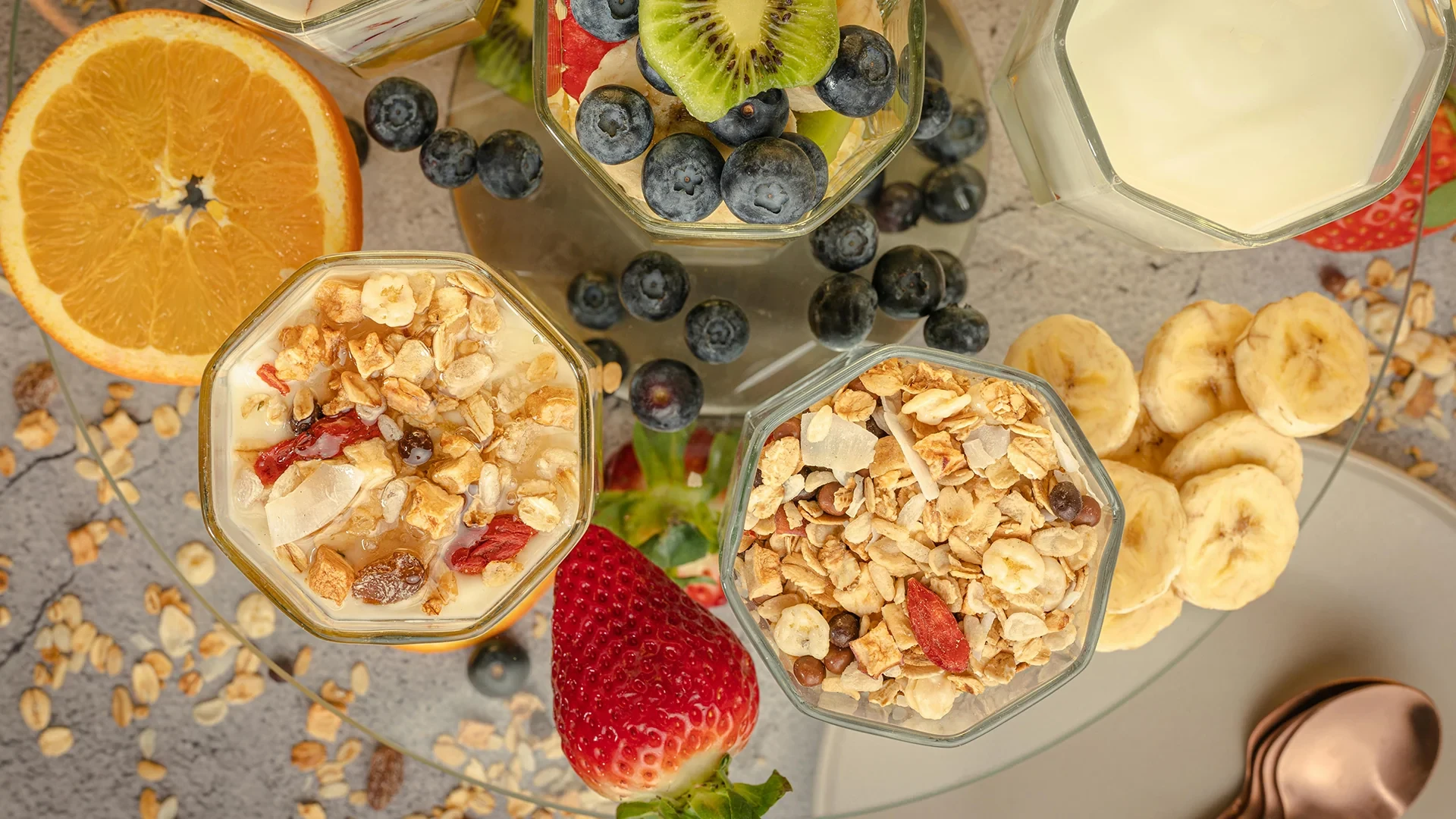
Start with foods you can repeat, not rare ingredients you will forget after one week. Citrus, bell peppers, broccoli, spinach, berries, yogurt, almonds, fatty fish, garlic, ginger, and turmeric give you a useful base that covers the major nutrient categories your immune system relies on.
Rotate them across meals for more variety. This approach makes foods to boost immunity easier to sustain — and sustainability is the only metric that actually matters here.
Citrus fruit, bell peppers, and broccoli are well-known vitamin C sources. Bell peppers and broccoli also bring colour and plant variety to the plate. Add spinach for beta-carotene, then pair these foods with protein and healthy fats for a more complete meal that does more than one nutrient job at a time.
Garlic, ginger, and turmeric contain bioactive compounds discussed in nutrition research. Use them as flavour builders in daily cooking — they make simple meals more interesting without turning your plate into a supplement protocol. If you want turmeric in a format that actually delivers a meaningful dose, our Curcumin Wonder Latte packs 500mg of curcumin per serve and fits into a morning routine without any effort. That is what a turmeric drink should look like.
Yogurt and fermented options support the gut-immune connection — a relationship that is far more significant than most people realise. Choose them as part of a varied diet, alongside fibre-rich plants such as berries, broccoli, and spinach. Gut health is not separate from immune health; it is part of the same system. If you want to cover the gut side more deliberately, our Turkey Tail Shroom Coffee brings functional mushroom support to your morning cup without replacing the coffee you already drink.
Adults often need an eating pattern that fits work, travel, training, and inconsistent meal times. The best foods for immune system support are the ones that remain practical under real-life pressure — not the ones that look good in a meal prep photo but disappear from your routine by Wednesday.
Nutrient absorption can shift with age, so food quality and variety matter more than volume. Build meals around protein, colourful produce, yogurt or fermented foods, almonds, and fatty fish when it suits your diet. These are not exotic choices — they are the foods that have consistently shown up in nutrition research because they consistently deliver.
For busy adults, keep citrus, berries, bell peppers, yogurt, and almonds easy to reach. These immune system foods require less planning than an elaborate reset and far less money than a cabinet full of supplements. The goal is a pattern you can hold, not a protocol you perform for a week and abandon.
If your schedule makes whole-food variety harder to hit every day, that is exactly where a well-formulated functional drink earns its place — not as a replacement, but as a reliable gap-filler that does not ask much of you.
Drinks can support hydration and add useful plant compounds. They should complement food, not replace meals that provide protein, fibre, and a wider nutrient range. The drink is not the strategy — it is part of one.
Green tea is a simple option. Warm lemon water and turmeric drinks can also fit a morning routine if you enjoy them and keep expectations grounded.
Start with water, then choose green tea, warm lemon water, or a turmeric drink as a familiar ritual. If you want something that goes further than a pinch of turmeric stirred into hot water, our Curcumin Wonder Latte delivers a clinically relevant curcumin dose in a format that actually tastes good — because a drink you skip is a drink that does nothing. Keep the expectation grounded regardless of what you choose: these drinks support a balanced routine, but consistency is the mechanism, not the ingredient.
Avoid treating a drink as a substitute for regular meals and varied foods. Also avoid products that frame themselves as instant protection — that framing is a marketing move, not a nutrition claim. A useful drink supports hydration and adds targeted compounds; a useful diet supplies the wider foundation that no drink can replicate alone.
To boost your immune system naturally, the most direct route is removing the gaps in your diet — not adding a single miracle food. If you are asking how to boost your immune system in 24 hours, the honest answer is: you can make better choices today that start moving the needle, but immune function is built over time, not unlocked in a day. Start now anyway.
No food can rebuild immune health in 24 hours. If your current diet lacks variety, adding nutrient-dense foods right away is still a sensible first step — because the alternative is waiting, and waiting helps nothing.
Focus on what you can do today: eat fruit and vegetables, include yogurt or fermented foods, add protein, and drink enough water. These changes support your routine quickly, but immune changes are not a stopwatch challenge. Natural immune boosters are most useful when they become normal meals. Seven days can help establish better habits, not prove a permanent change in immune strength.
Build each meal from a few repeatable choices. This keeps foods for immune health practical and avoids the trap of eating one 'hero' ingredient every day while ignoring everything else your body needs.
Use colour, protein, and gut-supporting foods as your guide. The wellness industry wants you to believe that complexity is sophistication. It is not. The eating patterns with the strongest track records are the ones people can actually maintain — and those are almost always the simple ones.
Breakfast: Yogurt with berries and almonds — covers probiotics, antioxidants, and healthy fats in one bowl.
Lunch: Spinach, bell peppers, and broccoli with a protein source and garlic — hits vitamin C, beta-carotene, and antimicrobial compounds together.
Dinner: Fatty fish with greens and ginger or turmeric — adds vitamin D, omega-3s, and anti-inflammatory support to close the day.
Snack: Citrus fruit or a handful of almonds — simple, portable, and genuinely useful rather than just low-calorie filler.
Keep citrus, bell peppers, broccoli, spinach, berries, yogurt, almonds, garlic, ginger, and fatty fish in regular rotation. These foods to fight infection are better viewed as nutrient-rich support foods that keep your system well-resourced — not as treatment for an illness you already have. That distinction matters, and any source blurring it is not being straight with you.
There is no simple home checklist that proves your immune system is strong. Immune function is complex, and food is only one part of the picture — sleep, stress, movement, and hydration all contribute.
Still, you may notice broader signs that your routine feels more stable. These can include steady energy, regular appetite, comfortable digestion, consistent eating habits, and feeling able to maintain your usual daily routine. None of these signs is a medical diagnosis, but they are reasonable indicators that your body is not fighting your lifestyle choices.
Food questions often seek one fast answer. The more accurate answer is usually a pattern, not a single item — but we will give you the most useful version of both.
Garlic and citrus are common top candidates because they are widely used in immune-focused food guidance. Yet no one food is enough on its own. Combine them with bell peppers, broccoli, spinach, berries, yogurt, almonds, and fatty fish for broader nutrient coverage that actually moves the needle.
Use seven days to create a reliable food pattern. Add colourful produce daily, include yogurt or fermented foods, choose protein at meals, and stay hydrated. That can improve the quality of your routine quickly, but it does not promise an instant immune transformation — and anyone telling you otherwise is selling something.
A well-functioning immune system tends to show up as: recovering from minor illness at a normal pace, wounds healing without prolonged complications, consistent energy levels without unexplained crashes, comfortable and regular digestion, and the ability to maintain your usual routine without frequent disruption. These are not diagnostic markers — they are practical signals that your body is managing its workload. If several of these feel off, diet and lifestyle are the first levers worth examining.
The top immune support foods to eat are familiar for a reason: they provide nutrients your body can use every day. Skip the instant-fix mindset — it is a distraction designed to sell products, not build health. Build meals around colourful plants, gut-supporting foods, protein, and hydration, then repeat the pattern long enough for it to matter. That is not a revolutionary idea. It is just the one that actually works.


Someone sent you
Powered by ReferRush