


How to Gain Weight Healthily with High-Calorie Vegetarian Foods

Get personalised recommendations with our assessment.
Personalised Health Diagnosis (PHD)
Gaining weight as a vegetarian isn't just about eating more—it's about eating smarter. The plant-powered path to healthy weight gain challenges outdated assumptions that vegetarian diets lack the caloric density needed for effective weight management. Many believe that vegetarian meals are inherently lower in calories, but this couldn't be further from the truth. With the right approach to high calorie foods for weight gain vegetarian diets, you can build lean mass, boost energy levels, and achieve your weight goals without compromising on nutrition. The key lies in understanding which plant-based foods pack the most nutritional punch per calorie, and how to combine them strategically for maximum impact.
Healthy weight gain requires a calculated approach to nutrition that goes beyond simply increasing portion sizes. Your body needs a surplus of 300-500 calories above your maintenance level to gain weight steadily—typically 1-2 pounds per week. This translates to consuming 2,500-3,500 calories daily for most individuals, depending on your baseline metabolic rate and activity level. The foundation of any successful vegetarian weight gain strategy rests on achieving the right macronutrient balance. Aim for 45-65% of your calories from complex carbohydrates, 20-35% from healthy fats, and 10-35% from protein sources. Unlike restrictive diets, your focus should be on nutrient-dense vegetarian foods that deliver both calories and essential vitamins, minerals, and phytonutrients.
Start by determining your Basal Metabolic Rate (BMR) using the Harris-Benedict equation, then multiply by your activity factor. Add 300-500 calories to this number for gradual, healthy weight gain. Track your progress weekly and adjust your intake accordingly—weight gain should be steady, not rapid.
Building an effective calorie-rich plant-based diet starts with identifying foods that deliver maximum nutritional value per calorie. These powerhouse ingredients form the foundation of your weight gain strategy, providing the energy density needed to reach your goals while supporting overall health and wellness.
Nuts deliver an impressive 150-200 calories per ounce, making them ideal for weight gain. Almonds provide 164 calories per ounce along with vitamin E and magnesium. Walnuts offer heart-healthy omega-3 fatty acids at 185 calories per ounce. Nut butters concentrate these benefits—two tablespoons of almond butter contain 190 calories and 7 grams of protein.
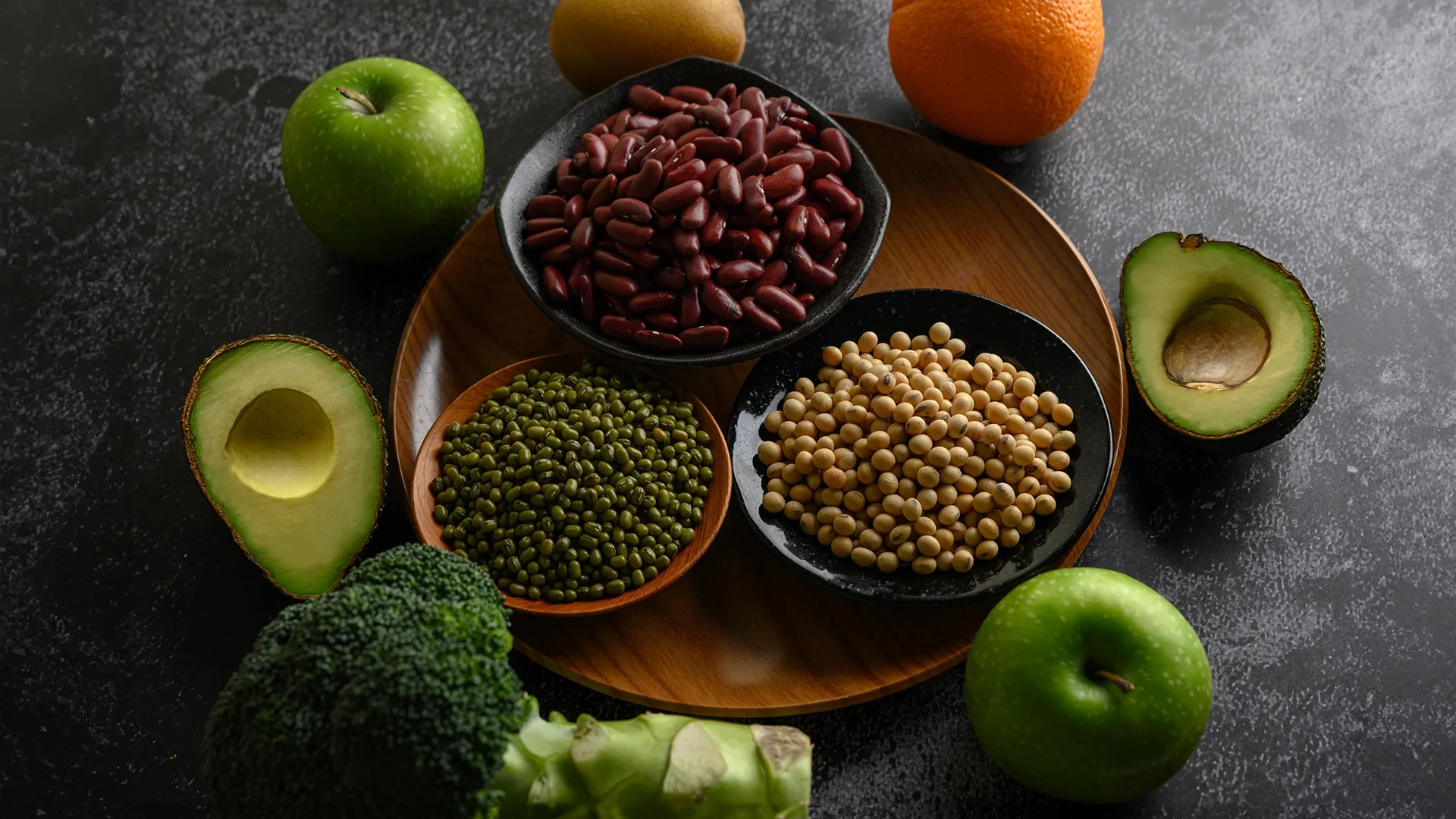
A single medium avocado packs 234 calories and 21 grams of monounsaturated fats. These creamy fruits blend seamlessly into smoothies, spread perfectly on toast, and enhance the absorption of fat-soluble vitamins. Their versatility makes them perfect for high calorie vegetarian meals throughout the day.
Quinoa delivers 222 calories per cooked cup along with all nine essential amino acids. Brown rice provides 216 calories per cup, while oats offer 307 calories per cup when cooked. These complex carbohydrates fuel your workouts and support muscle protein synthesis.
Chickpeas contain 269 calories per cooked cup with 15 grams of protein. Lentils provide 230 calories per cup, while black beans offer 227 calories. These high-calorie vegetarian protein sources support muscle growth while keeping you satiated between meals.
Full-fat Greek yogurt delivers 150 calories and 20 grams of protein per 6-ounce serving. Whole milk provides 150 calories per cup. For plant-based options, fortified soy milk offers 80-100 calories per cup with added protein, while coconut milk can provide up to 445 calories per cup.
Successful weight gain requires more than knowing which foods to eat—you need a systematic approach to meal planning that ensures consistent calorie intake throughout the day. The goal is to create vegetarian weight gain recipes that are both satisfying and nutrient-dense, supporting your body's increased energy needs while maintaining optimal health. Start your day with a calorie-dense breakfast that sets the tone for the entire day. A smoothie made with banana, oats, almond butter, protein powder, and full-fat milk can easily provide 600-800 calories. Follow this with a mid-morning snack of mixed nuts and dried fruits for an additional 300 calories.
Eat every 2-3 hours to maintain consistent energy levels and maximize calorie absorption. This approach prevents overwhelming your digestive system while ensuring steady nutrient delivery. Focus on three substantial meals supplemented by 2-3 energy-boosting vegetarian snacks throughout the day.
Smoothies offer an efficient way to consume high-calorie nutrients in liquid form. Combine 1 cup whole milk, 1 banana, 2 tablespoons almond butter, 1 cup oats, and a scoop of plant protein for approximately 700 calories. Add spinach or kale for extra nutrients without significantly impacting taste.
Prepare calorie-dense vegetarian meal ideas in advance to ensure consistency. Cook large batches of quinoa, roast nuts and seeds, and prepare protein-rich legume salads. Store these components separately and combine them throughout the week for quick, high-calorie meals.
Indian vegetarian cuisine offers countless opportunities for healthy weight gain, with traditional foods naturally rich in calories and nutrients. The key lies in optimizing preparation methods and portion sizes to maximize caloric density while maintaining the authentic flavors that make these meals satisfying and sustainable. Traditional Indian foods like dal makhani, paneer dishes, and ghee-enriched preparations naturally support weight gain goals. A single serving of dal makhani can provide 400-500 calories, while paneer butter masala offers 350-450 calories per serving. These vegetarian foods to gain weight fast form the backbone of an effective Indian vegetarian weight gain strategy.
Enhance traditional recipes by incorporating nuts, seeds, and healthy oils. Add cashews to gravies, sprinkle seeds on rotis, and use ghee liberally in cooking. These modifications can increase calorie content by 200-300 calories per meal without dramatically altering taste or texture.
South Indian dishes like coconut-based curries and North Indian preparations featuring cream and nuts offer excellent calorie density. Bengali sweets and Gujarati thali combinations provide diverse options for those following regional dietary preferences.
While whole foods should form the foundation of your weight gain strategy, targeted supplementation can bridge nutritional gaps and accelerate progress. Plant-based protein powders, in particular, offer a convenient way to boost both calories and protein intake without the bulk of whole foods. Ace Blend's protein offerings can significantly enhance your high-calorie vegetarian meal prep routine. INTENSE Protein, with 30 grams of protein per serving, blends seamlessly into smoothies and baked goods. For those who prefer subtlety, Unflavoured Protein can be incorporated into dal, gravies, and atta-based preparations, adding 26 grams of protein without altering taste profiles.
Combine your nutrition strategy with resistance training to ensure weight gain translates to lean muscle mass rather than fat accumulation. Focus on compound movements like squats, deadlifts, and overhead presses. Aim for 3-4 training sessions per week, allowing adequate recovery time between sessions.
Prioritize 7-9 hours of quality sleep nightly, as growth hormone release peaks during deep sleep phases. Consider Ace Blend's Reishi coffee for evening consumption—this functional drink supports relaxation and sleep quality without caffeine, helping optimize recovery and hormone production.
Answer: Healthy weight gain occurs at 1-2 pounds per week with consistent calorie surplus. Vegetarian diets can be just as effective as omnivorous diets when properly planned with adequate protein and calorie density.
Answer: Rapid weight gain can lead to excess fat accumulation rather than lean muscle mass. Focus on gradual progress with adequate protein intake and resistance training to ensure healthy weight gain patterns.
Answer: Aim for 1.6-2.2 grams of protein per kilogram of body weight daily. This ensures adequate amino acid availability for muscle protein synthesis while supporting overall recovery and growth.
Answer: Absolutely. Traditional Indian vegetarian cuisine offers numerous high-calorie options rich in proteins, healthy fats, and complex carbohydrates. Focus on dishes with ghee, nuts, paneer, and legume-based preparations.
Answer: Meal timing supports consistent energy levels and optimal nutrient absorption. Eating every 2-3 hours prevents energy crashes and ensures your body has constant access to building blocks for growth and recovery.
Healthy weight gain on a vegetarian diet requires strategic planning, not just increased eating. Focus on nutrient-dense vegetarian meal plans that prioritize calorie-dense whole foods like nuts, avocados, quinoa, and legumes. Combine these with proper meal timing, adequate protein intake, and resistance training for optimal results. Remember that sustainable weight gain is a marathon, not a sprint. Your body needs time to adapt to increased calorie intake and build lean muscle mass. Stay consistent with your nutrition plan, track your progress weekly, and adjust your approach based on results. The plant-powered path to healthy weight gain offers numerous benefits beyond the scale—improved energy levels, better digestion, and enhanced overall wellness make this journey worthwhile for long-term health optimization.


Someone sent you
Powered by ReferRush