










Idli Calories: Your Complete Nutrition Guide

Get personalised recommendations with our assessment.
Personalised Health Diagnosis (PHD)
When it comes to South Indian breakfast staples, few foods spark as much curiosity about their nutritional value as the humble idli. This steamed rice cake has been fueling millions for generations, but in today's health-conscious world, understanding exactly what goes into your body matters more than ever. Whether you're tracking calories for weight management or simply want to make informed food choices, knowing the precise nutritional breakdown of your favorite breakfast can be a game-changer. Let's dive deep into the world of idli nutrition and uncover everything you need to know about this beloved fermented food.
The calorie content of a single idli isn't a one-size-fits-all number. The exact count depends on several factors, with size being the most significant variable. Understanding these variations helps you make precise dietary calculations and portion control decisions. A standard medium-sized idli weighing approximately 40 grams contains between 39 to 58 calories. This range exists because different recipes and preparation methods can slightly alter the final caloric value. The fermentation process, rice-to-urad dal ratio, and even the steaming technique can influence the nutritional density.
Size matters when calculating idli calories. Here's the precise breakdown:
• Small idli (30g): 61 calories
• Medium idli (40g): 39-58 calories
• Large idli (50g): 78-102 calories
These measurements are based on traditional preparation methods using the classic 3:1 ratio of rice to urad dal. Restaurant-style idlis might be slightly larger, potentially reaching 60-70 grams per piece.
Several factors can push your idli's calorie count up or down:
• Rice variety: Using different rice types affects carbohydrate density
• Fermentation time: Longer fermentation can slightly reduce available carbohydrates
• Added ingredients: Oil, ghee, or semolina additions increase calories
• Preparation method: Steaming versus other cooking methods
Beyond just calories, idli offers a surprisingly balanced nutritional profile that makes it an excellent breakfast choice. The fermentation process not only enhances digestibility but also increases the bioavailability of nutrients, making this simple food a nutritional powerhouse. The macronutrient distribution in idli is particularly noteworthy. Unlike many processed breakfast options, idli provides sustained energy without excessive fat content, making it ideal for those focused on clean eating and optimal nutrition.
Here's what you get in a single medium idli:
• Calories: 58-61 kcal
• Protein: 2-3g (approximately 15% of total calories)
• Carbohydrates: 7-15g (roughly 82% of total calories)
• Fat: Less than 1g (about 3% of total calories)
• Fibre: 0.5-1g
• Sugar: Minimal natural sugars from rice
This distribution makes idli an excellent source of complex carbohydrates with adequate protein content for a plant-based food.
The fermentation process transforms simple ingredients into a nutrient-dense food:
• B-vitamins: Enhanced through fermentation, particularly B12, folate, and thiamine
• Essential amino acids: Complete protein profile when combined with sambar
• Minerals: Iron, calcium, phosphorus, and magnesium
• Probiotics: Beneficial bacteria from natural fermentation
• Antioxidants: Compounds developed during the fermentation process
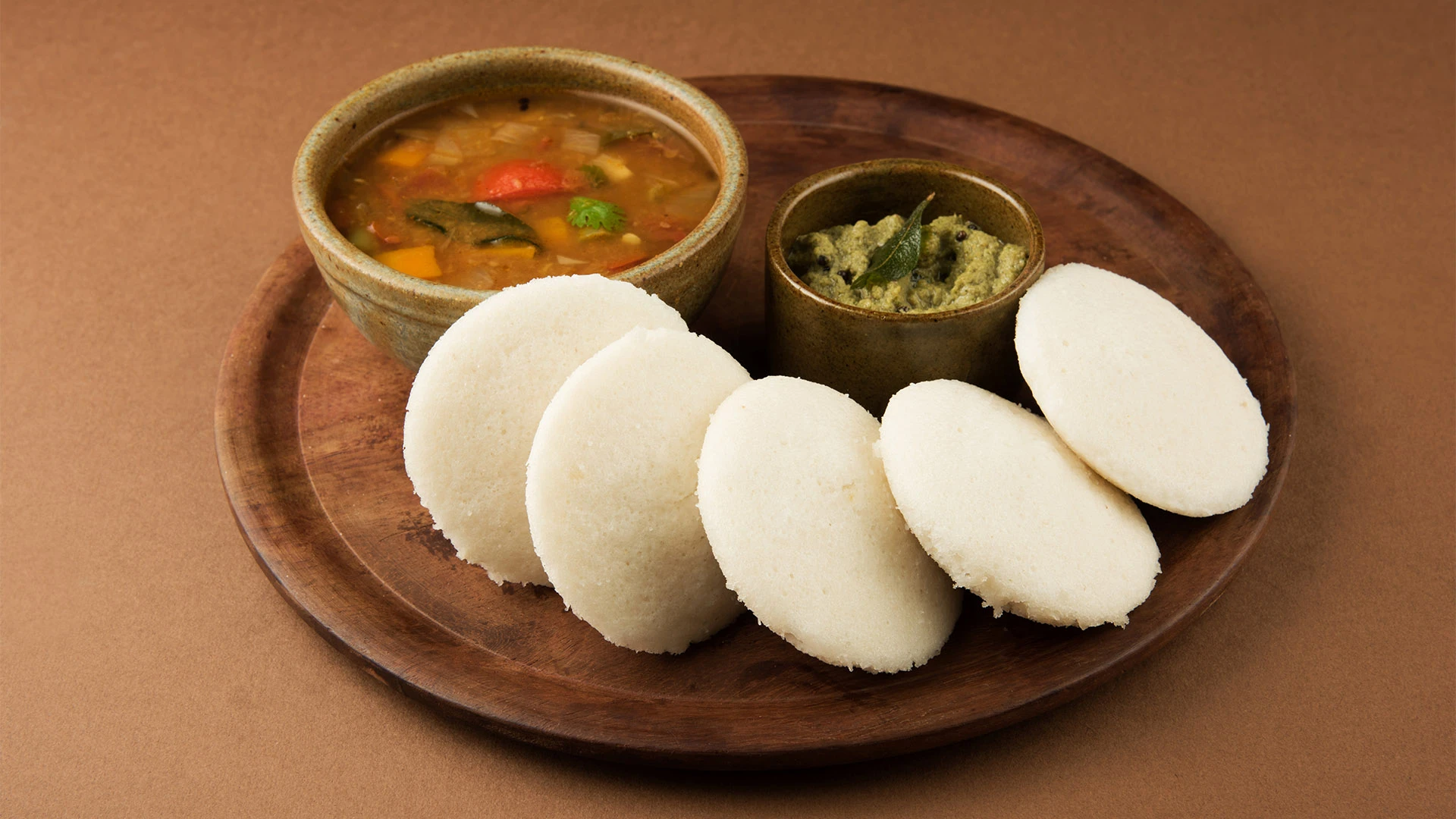
Rarely do we eat idli in isolation. The traditional South Indian breakfast combines idli with sambar and various chutneys, creating a complete meal that's both satisfying and nutritionally balanced. Understanding the caloric impact of these accompaniments helps you plan your entire breakfast more effectively. The beauty of idli lies in its versatility and how it pairs with protein-rich sambar and nutrient-dense chutneys. This combination not only enhances flavor but also creates a more complete amino acid profile and increases overall satiety.
Here's how your idli breakfast adds up:
• 2 idlis with sambar and coconut chutney: ~350 calories
• 3 idlis with sambar only: ~300-400 calories
• 4 idlis complete meal with sides: ~600-650 calories
• 2 idlis with tomato chutney: ~280-320 calories
Sambar typically adds 80-120 calories per serving, while coconut chutney contributes 60-80 calories per tablespoon.
Maximize nutrition while managing calories:
• Vegetable-loaded sambar: Increases fiber and micronutrients
• Mint chutney: Lower calorie alternative to coconut chutney
• Protein-enhanced sambar: Add extra lentils for higher protein content
• Fresh vegetable sides: Cucumber, tomato, or carrot sticks
The question of whether idli supports weight loss goals deserves a nuanced answer based on scientific evidence and practical application. While no single food is a magic bullet for weight management, idli possesses several characteristics that can support a healthy weight loss journey when incorporated thoughtfully into your diet. Idli's low calorie density combined with its satiety factor makes it an excellent choice for those looking to manage their weight without feeling deprived. The fermentation process also adds digestive benefits that can support overall metabolic health.
Several factors make idli weight-loss friendly:
• Low calorie density: High volume, relatively low calories
• Protein content: Helps maintain muscle mass during weight loss
• Complex carbohydrates: Provide sustained energy without blood sugar spikes
• Fermented benefits: Support gut health, which influences metabolism
• Portion control: Natural serving sizes make overeating difficult
Comparing idli to common breakfast choices reveals its advantages:
• 2 idlis (120 calories) vs 2 slices bread (160 calories): Idli wins
• Idli vs chapati: Similar calories but idli offers better digestibility
• Idli vs cereal: More protein, less sugar, better satiety
• Idli vs paratha: Significantly lower fat and calories
Beyond weight management, idli offers numerous health advantages that make it a valuable addition to any nutrition-focused lifestyle. The combination of fermentation benefits, balanced macronutrients, and clean ingredients aligns perfectly with modern wellness goals.
Fermented foods like idli provide unique digestive benefits:
• Probiotic content: Supports healthy gut microbiome
• Enhanced digestibility: Fermentation pre-digests proteins and carbohydrates
• Reduced anti-nutrients: Fermentation neutralizes compounds that inhibit nutrient absorption
• Gentle on stomach: Ideal for those with sensitive digestion
Idli consumption supports various health goals:
• Heart health: Zero cholesterol, minimal saturated fat
• Blood sugar management: Complex carbs provide steady glucose release
• Muscle maintenance: Quality protein supports lean mass
• Energy provision: Sustained fuel for daily activities
• Nutrient absorption: B-vitamins support metabolic processes
While traditional idli is already a healthy choice, modern nutrition science offers ways to enhance its nutritional profile further. These modifications can boost protein content, add fibre, or increase micronutrient density without compromising the beloved taste and texture. Innovation in traditional recipes allows us to honor cultural food wisdom while meeting contemporary nutritional needs. Small tweaks can significantly amplify the health benefits of this classic breakfast.
Consider these healthy additions:
• Millet integration: Replace 25% of rice with finger millet for added protein and minerals
• Quinoa addition: Mix quinoa for complete amino acid profile
• Vegetable incorporation: Carrot, spinach, or beetroot for vitamins and antioxidants
• Protein fortification: Add a scoop of our Unflavoured Protein to the batter
• Seed additions: Chia or flax seeds for omega-3 fatty acids
Maximize benefits through smart preparation:
• Fermentation time: 8-12 hours for optimal probiotic development
• Portion awareness: 2-3 idlis per meal for balanced intake
• Timing optimization: Morning consumption for sustained energy
• Hydration pairing: Consume with adequate water for fibre benefits
Two medium-sized idlis contain approximately 116-122 calories. This makes them an excellent low-calorie breakfast option that provides sustained energy without excessive caloric load.
Yes, idli can support weight loss goals when consumed as part of a balanced diet. Its low calorie density, protein content, and complex carbohydrates help maintain satiety while providing essential nutrients.
A single medium idli provides 2-3 grams of protein. While this might seem modest, when combined with sambar (which contains lentils), the meal provides a complete amino acid profile.
Both have merits, but idli offers advantages in digestibility due to fermentation and typically contains fewer calories per serving. Chapati provides more fibre, while idli offers probiotic benefits.
Idli can be part of a diabetic diet when consumed in moderation. The fermentation process and complex carbohydrates help provide steadier blood sugar response compared to simple carbohydrates.
For most adults, 2-3 idlis with sambar and chutney provide a balanced breakfast. Active individuals or those with higher caloric needs might consume 3-4 idlis.
Idli stands out as a nutritionally intelligent breakfast choice that aligns with modern health goals while honoring traditional food wisdom. With just 39-58 calories per medium piece, it provides sustained energy, quality protein, and digestive benefits through natural fermentation. The beauty of idli lies not just in its modest calorie count, but in its complete nutritional package. When paired with protein-rich sambar and nutrient-dense chutneys, it creates a breakfast that supports weight management, digestive health, and overall wellness. For those committed to clean, optimized nutrition, idli represents the perfect intersection of tradition and modern nutritional science – simple, effective, and naturally plant-powered.

